
Cooper’s Studios, Westgate Road, Newcastle-upon-Tyne
Cooper’s Auction Mart was built in 1897 for James Cooper as an auction house and multi-storey horse, cart and cycle repository. He recognised early on that motor cars would change society and adapted the building to accommodate cars.
The facade of Cooper’s reflected the business operations behind: with the offices and client entrance to the left, stabling to the centre and tack rooms to the right, with a lift core for carriages/motor cars.
Running beneath the building lie Roman remains of Hadrian’s Wall, elements of which were exposed during excavation.
The building was listed Grade II in 2005.
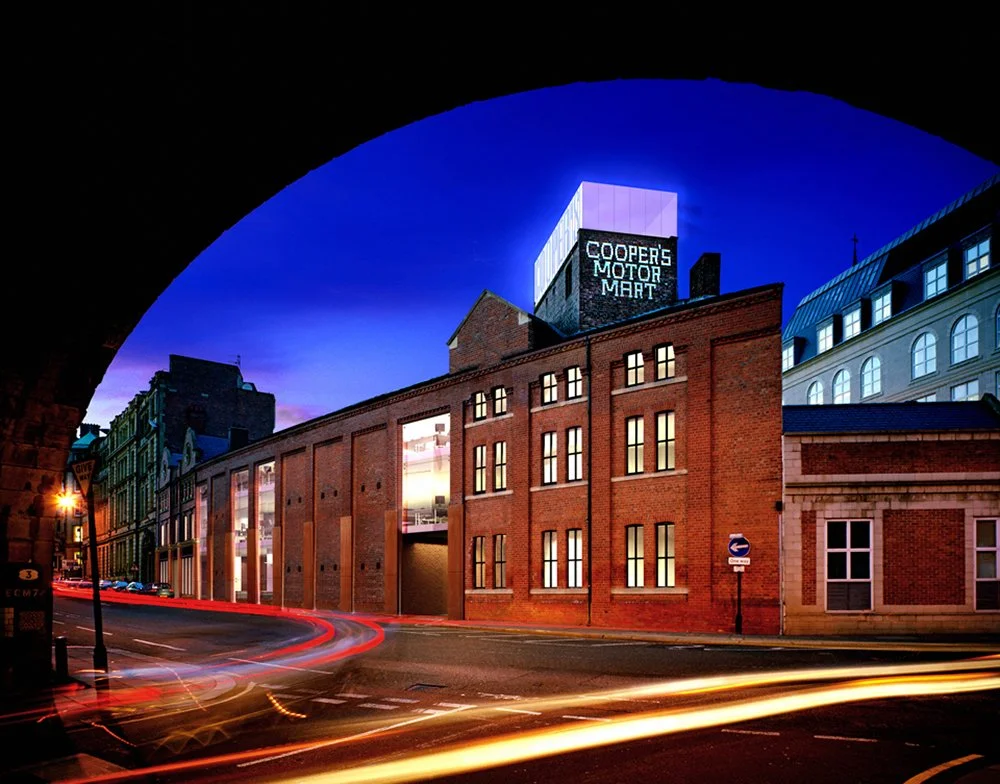
© Ryder Architects
“In a world where principles of preservation and conservation can often clash, where remodelling and new uses for historic structures can easily conflict with these principles, Catherine has always been a breath of fresh air.
She is principled yet pragmatic. She brings an informed and creative eye to problem-solving in her projects and, fundamentally, she engages positively with the process.
No pushover, she challenges and will fight her corner - invariably to the benefit of the final outcome.
Coopers’ Studios is a case in point. We bought the semi-derelict purpose-built Edwardian stables and carriage works in Newcastle city centre after it was saved from demolition by listing.
We wanted new studios, but there was little natural light, fragmented floor plates and no land around it to plug in essential vertical circulation. (The existing method is a horse ramp!)
I was standing on the opposite side of the road one evening, pondering the question of how to introduce glazing into the blank facade. I concluded that the ideal solution would be to remove full-height panels of brickwork and simply replace them with structural glazing. But how could I sell that to Historic England?
By happenstance, Catherine walked by and said, “You know you should just take out those whole panels of brick and glaze the full openings”
And we did. It was radical but absolutely right. It maintained the scale, proportion and integrity of the facade and gave us the perfect internal environment for our studio.
There were numerous other interventions that we resolved together, but that chance encounter made the project and has been a standout moment in my long career in architecture.
Thank you, Catherine!”